

The Post Tiny List widget from Atomic Elements is a compact and versatile tool for displaying blog posts in a clean, space-efficient list layout. It allows you to showcase post titles, featured images, and key post information in a streamlined format, making it perfect for sidebars, footers, recent posts, and featured content sections. With flexible layout and styling options, you can easily customize the widget to match your website’s design while improving content visibility and user navigation. In this documentation, we will guide you through how to use and customize the Post Tiny List widget in Atomic Elements.
Enable the Post Tiny List Widget #
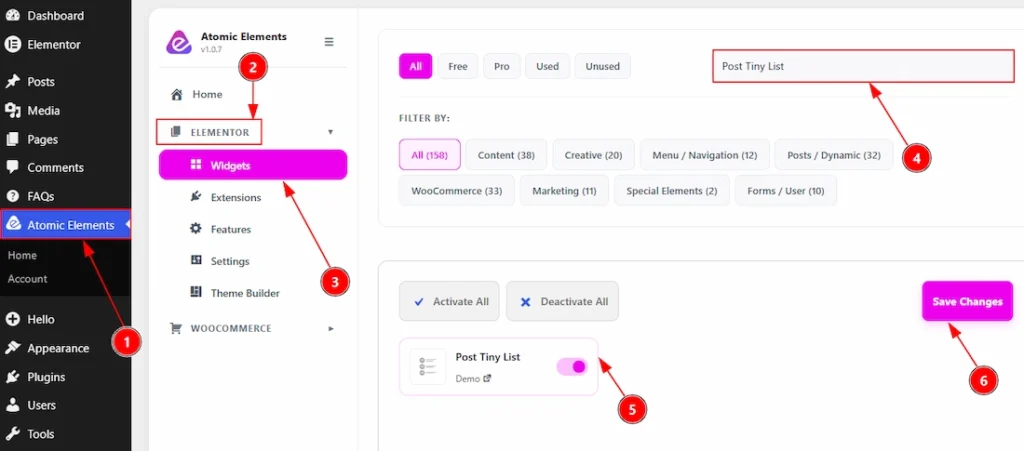
To use the Post Tiny List by Atomic Elements, first, you have to enable the widget.
- Go to WordPress Dashboard → Atomic Elements Plugin dashboard.
- Then, click on the Elementor Section to open the dropdown.
- Then Click the Widgets Tab.
- Search the Post Tiny List Widget Name.
- Enable the Post Tiny List Widget.
- Hit the Save Settings Button.
Inserting the Post Tiny List widget #
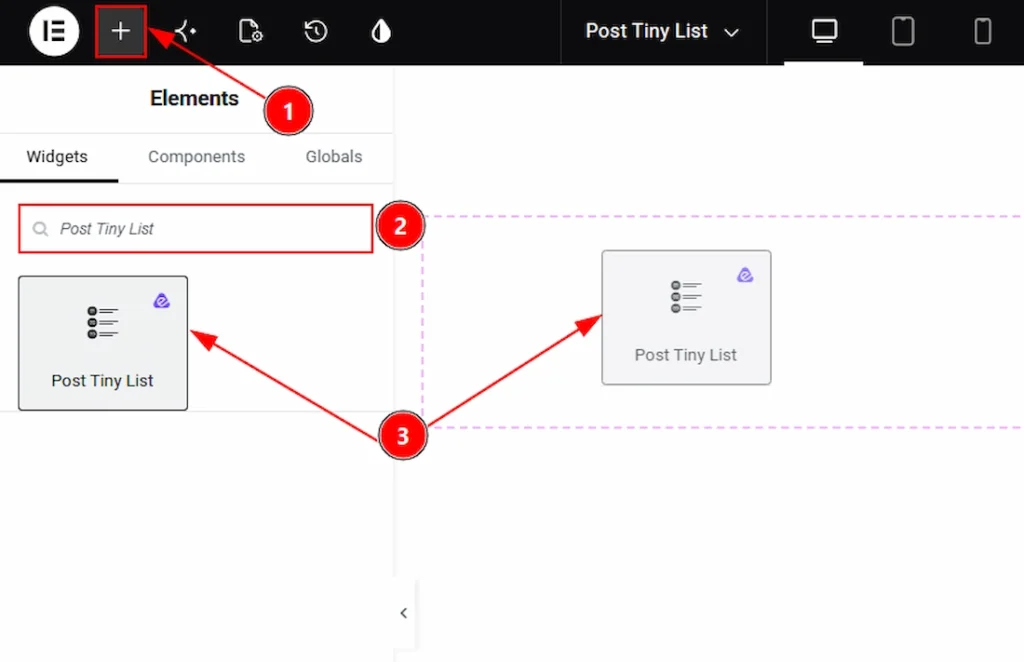
1. Go to the Elementor Editor Page and Hit the “+” icon Button.
2. Search the Post Tiny List widget.
3. Drag the widget and drop it on the editor page
Content Tab Settings #
Layout Section #
Go to Content → Layout
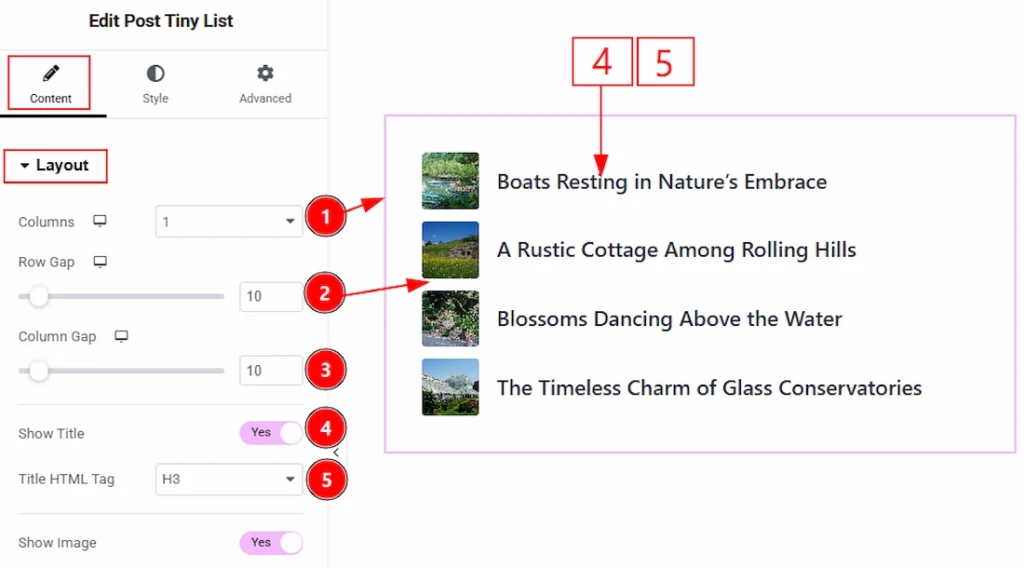
1. Column: You can select the number of the column that you want to show to your audience with this option.
2. Row Gap: You can adjust the gap between the rows with this option.
3. Column Gap: You can adjust the gap between the column with this option. Make sure you have selected the column more that one.
4. Show Title: Enable the switcher to show the title to your audience with this option.
5. Title HTML Tag: You can select the title HTML tag with this option.
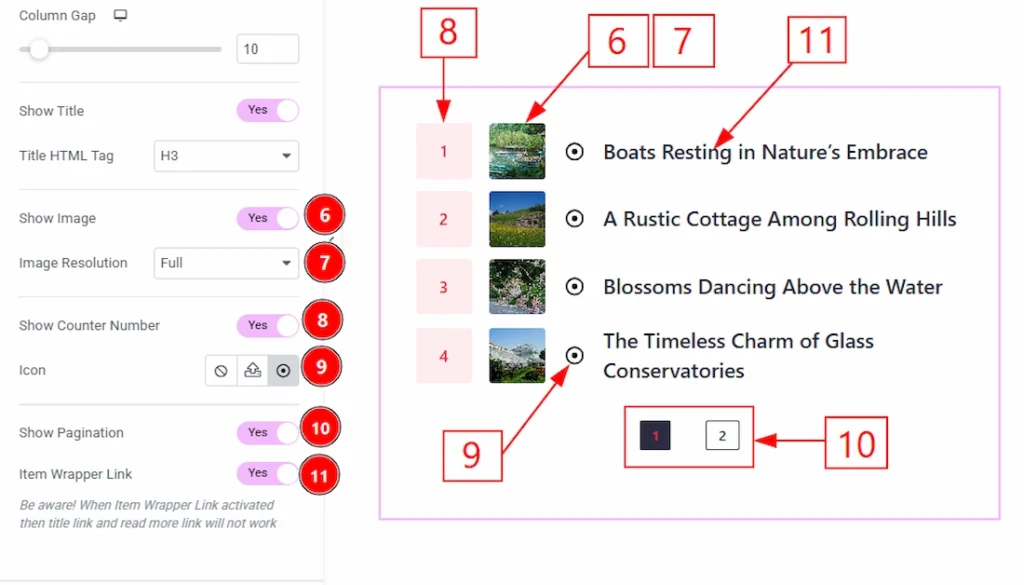
6. Show Image: Enable the switcher to visible post image in the list with this option.
7. Image Resolution: You can adjust the image resolution with this option.
8. Show Counter Number: Enable the switcher to show the visible post counter number with this option.
10. Show Pagination: Enable the switcher to show the pagination to your audience with this option.
11. Item Wrapper Link: Enable the switcher to make the posts linked with this option.
Query Section #
Go to Content → Query
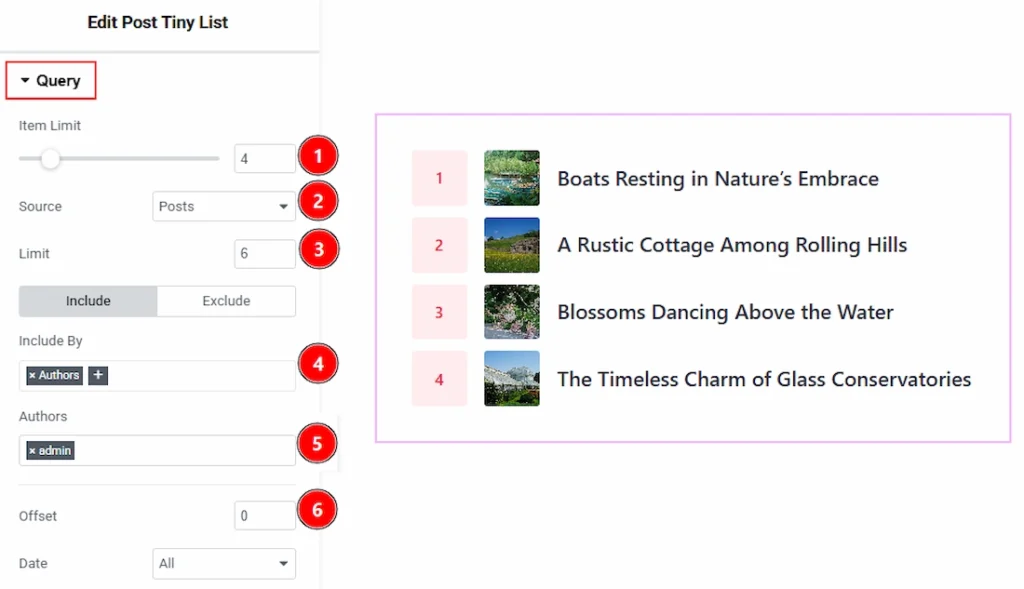
1. Item Limit: You can adjust the limit of the posts to show to your audience in one page with this option.
2. Source: Select the source for the list from here. The types of sources are – Posts, Pages, Floating Elements, FAQs, Mega Menu Items, Template Items, Manual Selection, Current Query, and Related. Here, we selected the type as Posts.
3. Limit: You can adjust the limit here of how many posts you want to show in the Post tiny List.
4. Include/Exclude Selection: Select the Include / Exclude filter to show/hide specific posts by Terms (Tags/Categories) or Authors. Here, we selected the include field as Author.
5. Author: This option lets you select the author’s name whose post you want to add to the list.
6. Offset: The Offset option lets you skip a certain number of posts from the start, so the display begins from the next post instead. Keeping it 0 means post without any exclusion.
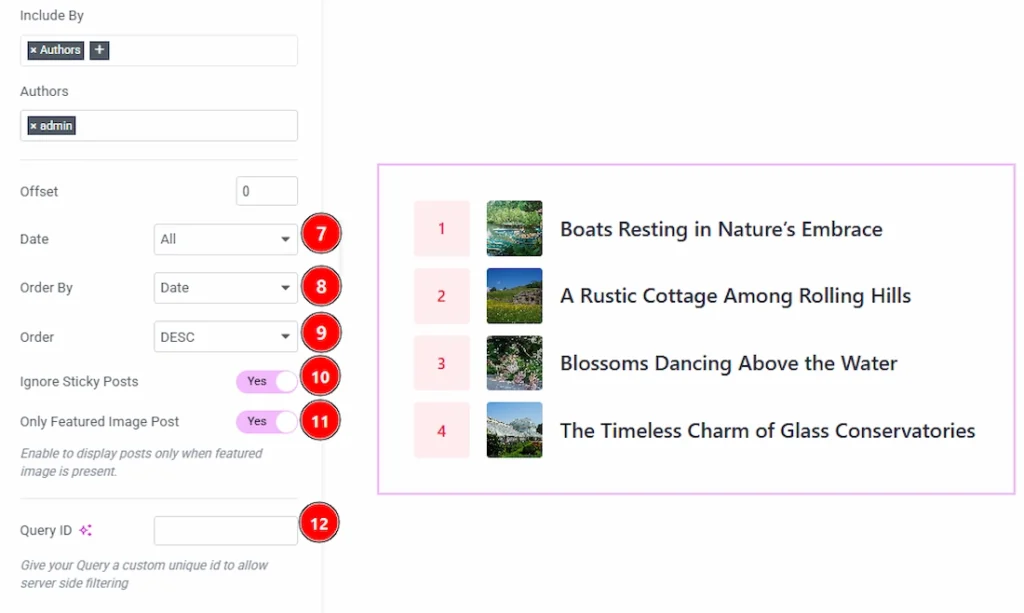
7. Date: You can select the post as per the date of creation with this option.
8. Order By: It controls the data you want to display through title, id, date, author, comment count, menu order & random. Here we selected the order as date.
9. Order: This option controls the order by which data is arranged. There are two types of order. Ascending Order (Starts from the smallest or lowest value and goes to the largest or highest.) & Descending Order (Starts from the largest or highest value and goes to the smallest or lowest.)
10. Ignore Sticky Posts: Enable the switcher to ignore the posts that are kept sticky.
11. Only Featured Image Post: Enable or disable the switcher to show or hide the featured image post.
12. Query ID: Give your query a custom, unique ID to allow server-side filtering.
Style Tab Settings #
Item Section #
Go to Style → Item
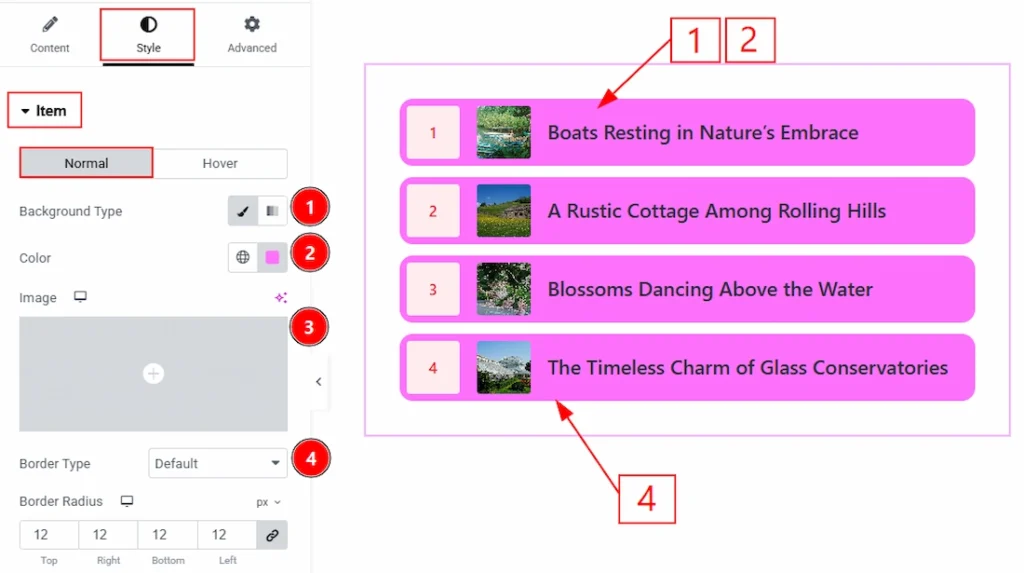
In this section, we have two more tabs. These are Normal & Hover. Let’s start with the Normal Tab first –
1. Background Type: You can change the background type to be classic or gradient with this option. Here, we have selected the background type as Classic.
2. Color: You can change the background color of the items with this option.
3. Image: You can change the background image with this option.
4. Border Type: You can add and change the border types with this option.
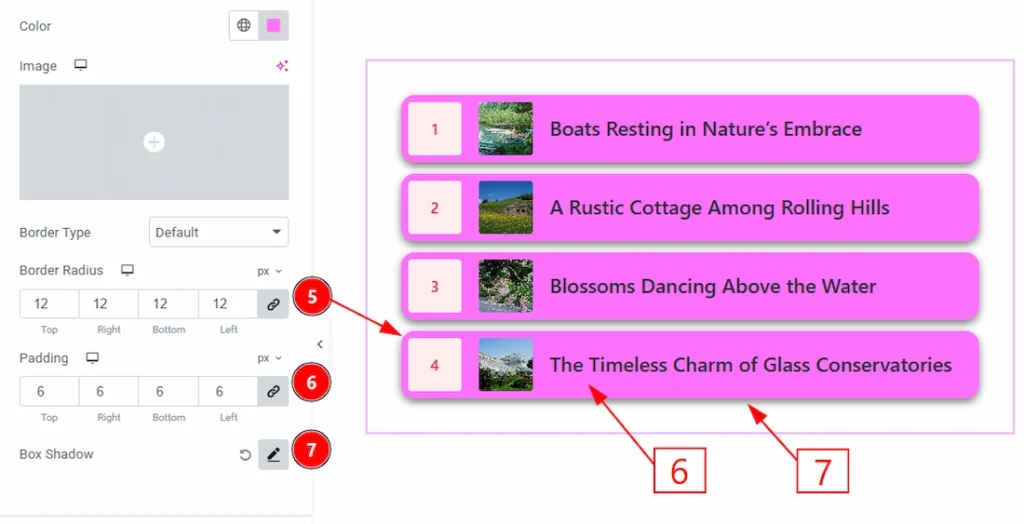
5. Border Radius: You can control the roundness of the border with this option.
6. Padding: You can adjust the inner space of the items with this option.
7. Box Shadow: You can add a shadow effect to the items with this option.
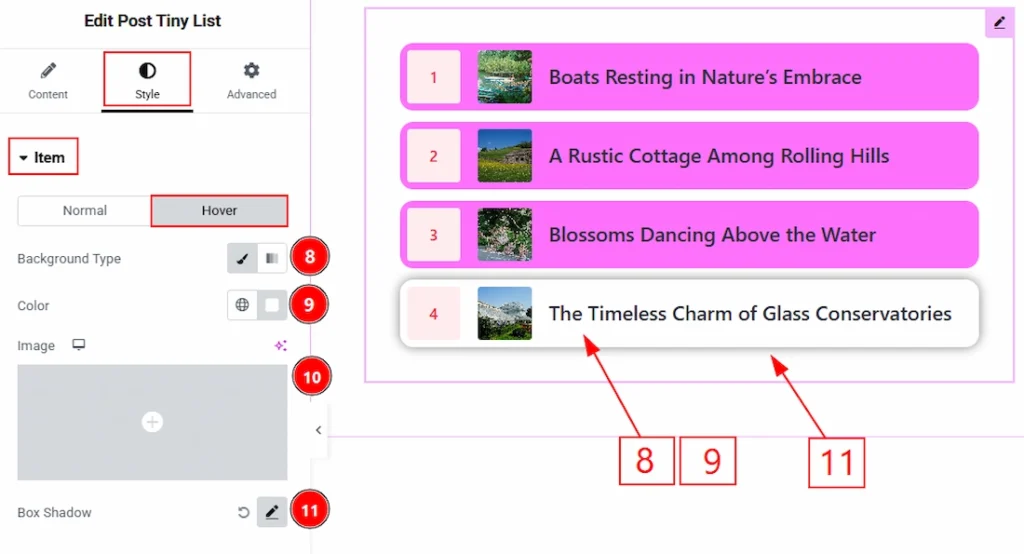
Now, let’s proceed to the Hover Tab –
8. Background Type: You can change the background type to be classic or gradient with this option. Here, we have selected the background type as Classic.
9. Color: You can change the background hover color with this option.
10. Image: You can change the background hover image with this option.
11. Box Shadow: You can add a hover shadow effect to the items with this option.
Image Section #
Go to Style → Image
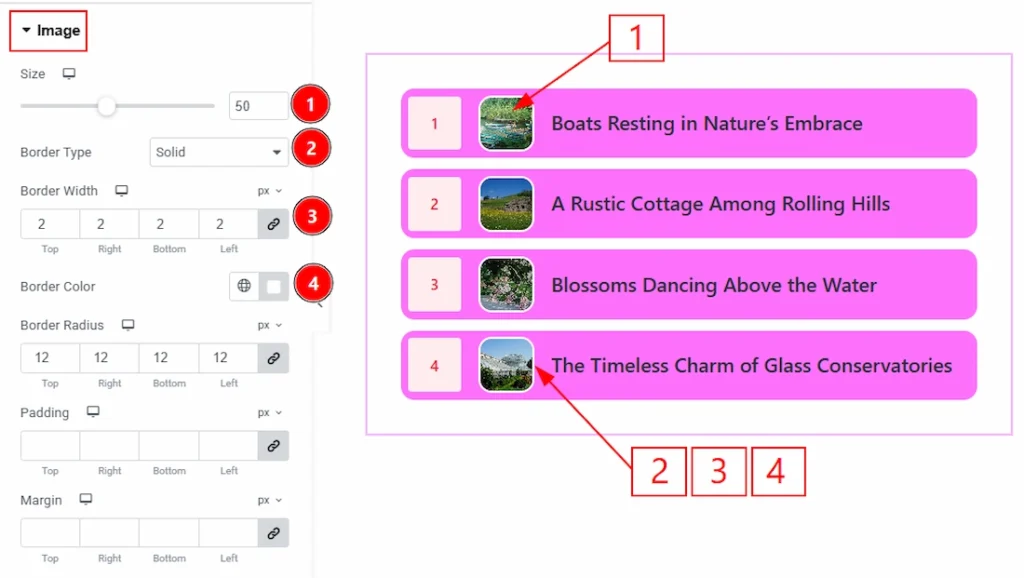
1. Size: You can make changes to the image size with this option.
2. Border Type: You can add and change the border types with this option.
3. Border Width: You can set the thickness of the border with this option.
4. Border Color: You can change the border color with this option.
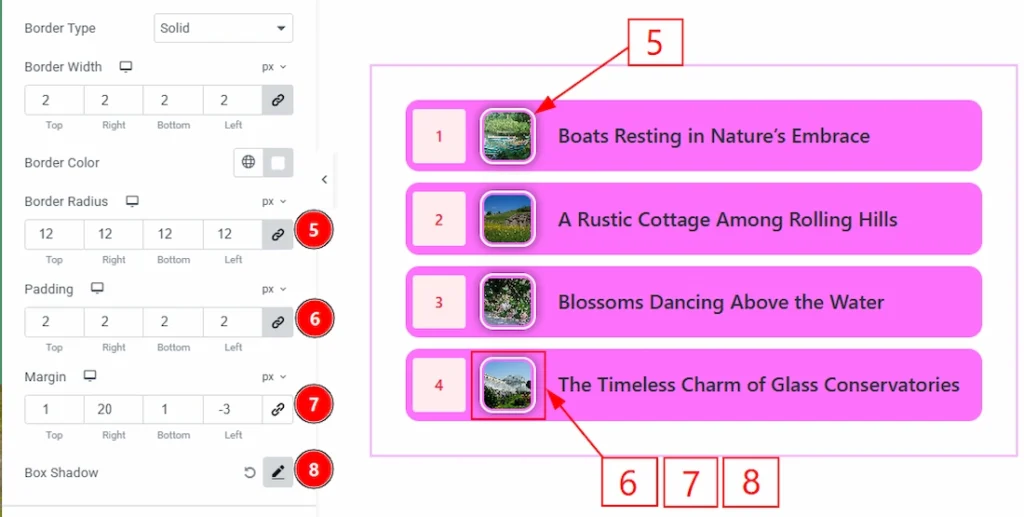
5. Border Radius: You can control the roundness of the border with this option.
6. Padding: You can adjust the inner space of the image with this option.
7. Margin: You can adjust the space around the image with this option.
8. Box Shadow: You can add a shadow effect to the image with this option.
Title Section #
Go to Style → Title
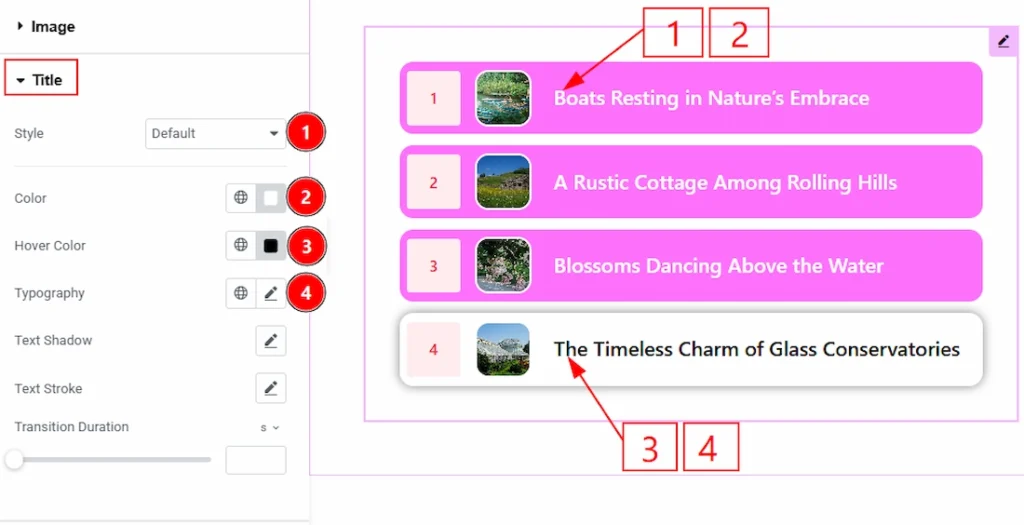
1. Style: You can select a style to apply on the title with this option.
2. Color: You can change the title text color with this option.
3. Hover Color: You can change the title hover text color with this option.
4. Typography: Change the font family, size, weight, transform, style, decoration, line height, letter spacing, and word spacing from here.
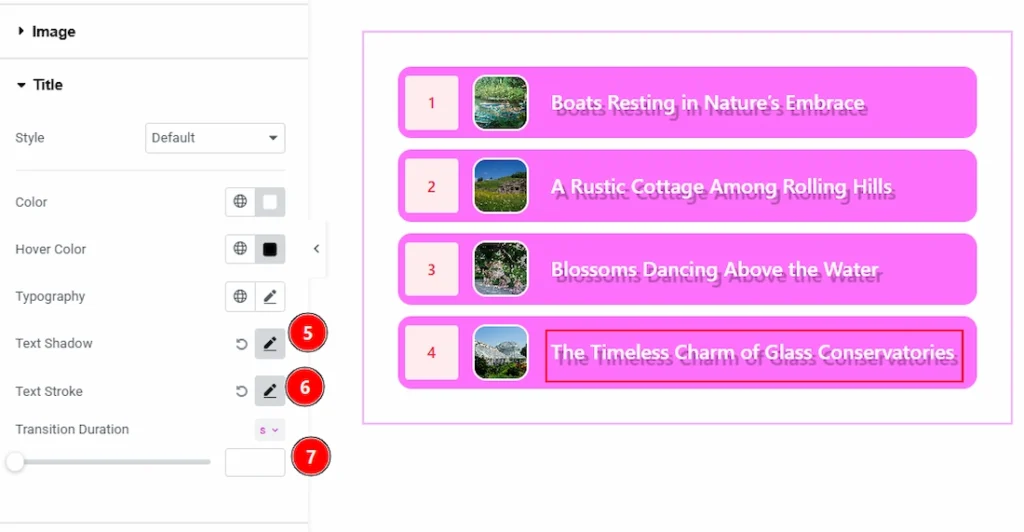
5. Text Shadow: You can add a shadow effect to the title text with this option.
6. Text Stroke: You can add stroke to the text and change it’s color with this option.
7. Transition Duration: You can add a transition effect to the title text with this option.
Counter Number Section #
Go to Style → Counter Number
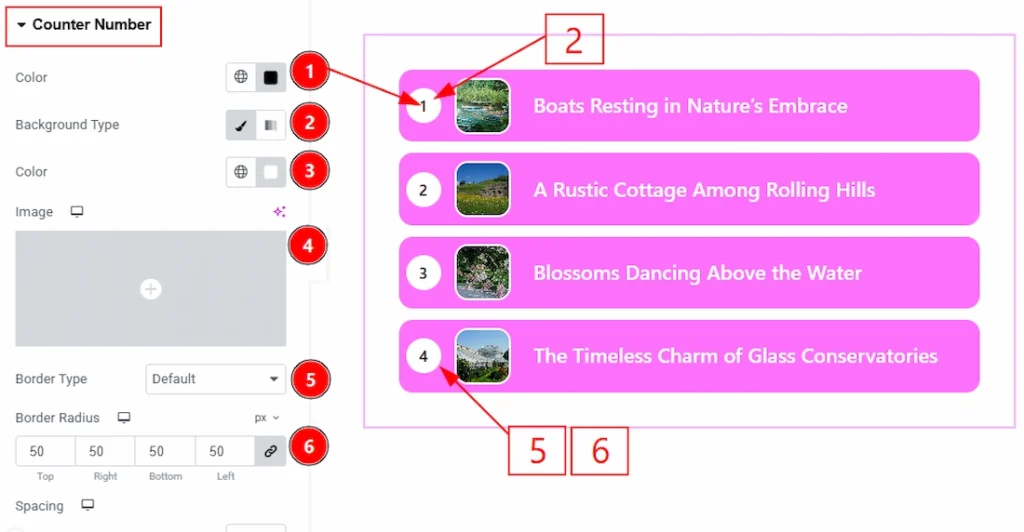
1. Color: You can change the counter number color with this option.
2. Background Type: You can change the background type to be classic or gradient with this option. Here, we have selected the background type as Classic.
3. Color: You can change the background color with this option.
4. Image: You can change the background image with this option.
5. Border Type: You can add and change the border types with this option.
6. Border Radius: You can control the roundness of the border with this option.
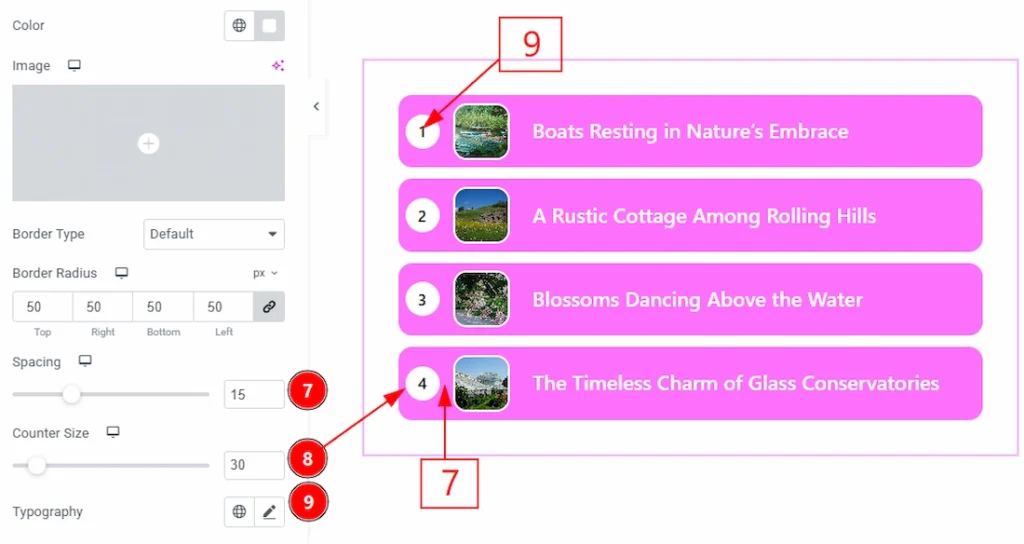
7. Spacing: You can adjust the space between the image and the counter number field with this option.
8. Counter Size: You can make changes to the counter number size with this option.
9. Typography: Change the font family, size, weight, transform, style, decoration, line height, letter spacing, and word spacing from here.
Video Assist #
You can also watch the video tutorial to learn more about the Post Tiny List Widget. Please visit the demo page for examples.
Thanks for being with us.